July 31, 2016

Land of the Living Dead
Have you ever had an idea haunt you night and day for years and years? An idea that won’t be deterred in spite of all the naysaying and fear you can muster? The kind of idea that sends your emotions running wild as though you’re the live bait in a zombie apocalypse movie?
Finally, after almost a decade of creating and delivering weird and wonderful concepts such as Agile Fairytales, Enterprise Gardening and even the first ever Choose-Your-Own-Adventure novel about Agile where you get to play the Agile Coach to save a failing Agile team in an online dating company, I’ve got myself a puppy.
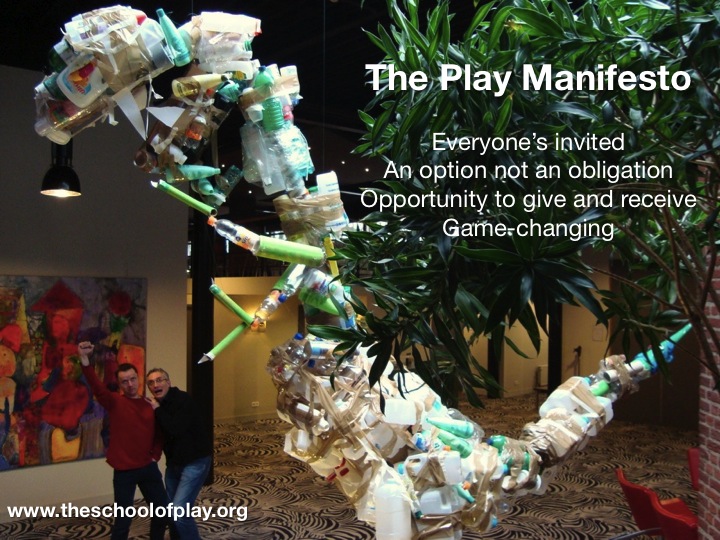
Not the furry, lick-your-face-silly kind. Meet The School of Play, my new puppy of a startup, dedicated to promoting happier adulthood through lifelong play. The School of Play is a popup school where we inspire and enable adults to make their dreams come true by nurturing their inner chimp and developing their play intelligence through play adventures. Consider this your invite to play like you’ve never imagined… Not just for your survival. For your happiness and overall well-being. Play soon!
June 17, 2016
“Without music, life would be a mistake” – Nietzsche
When I was little, I was taken to Yamaha piano classes every Saturday. I remember sitting between two mini world talents as I banged at the keys, vaguely wondering how the other children managed to translate those tadpole scribbles into beautiful tunes.
Then one auspicious day, my mum asked, “Would you like to stop going to piano classes?” To which I replied, “Yes!” And that was one of my earliest memories of the sweet taste of liberation. And many other things besides.
The conclusion from this experience was stored in perpetuity in my brain’s computer. Because my computer was efficient, it readily replayed its recorded message at every opportunity: “I am not musically talented. I will never play a musical instrument. I cannot sing…”
… Until the day came when I became a parent and learned that, as a parent,”You can only give what you have”. Suddenly, from across the misty distance of time and space, I heard the familiar sound of banging keys and I was paralysed with fear. Of not being good enough. And this time, my child’s fate is at stake.
Then somewhere from deep within me, amidst my chilling and profound sense of loss, a gentle and defiant voice spoke up. “Wouldn’t it be nice to make my own music? To sing and play with all my heart?”
Without knowing how or when that wish would come true, the most important thing had happened, a pre-requisite for all wishes before they can come true: my heart had made a wish.
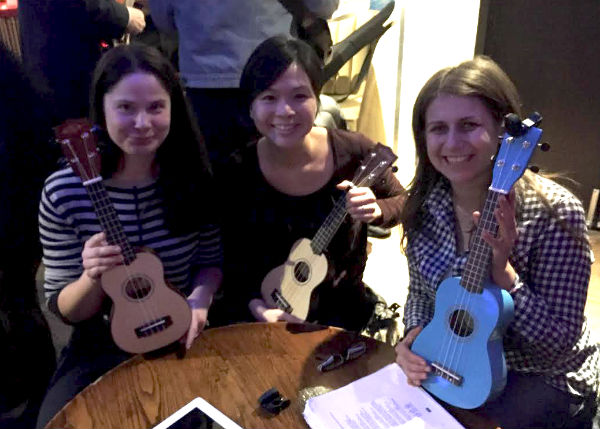
Within days, my friend Vira offered me the gift of music in the form of the ukulele so that I could share music with my little girl. And what better way to celebrate life than by sharing the gift of song?
Play for Your Life
I hope you’ll be able to join our uke jam keynote (our uke troupe’s called The Lost and Foundlings) at BCS SPA on Tuesday, 28 June where we’ll be supported by The Fleas who’ll bring along ukuleles so you, too, can have a go. No previous experience required, just the willingness to play!
And if you already play an instrument, do bring it to the conference with you that day because uke jams sound even better with all sorts of different instruments!
And if you’ve always had a longing to learn to play the uke and you fancy buying one to bring along, then a decent starter uke costs around £20-£30 (we recommend Kala or Mahalo available from Amazon and good music shops). Let the music play!
March 09, 2016
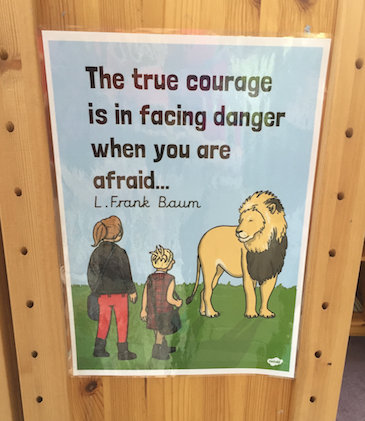
Silence is always accompanied by Reason.
For some, Silence is a solitary figure who has found inner peace.
For others, Silence is the one in charge when we find ourselves stuck. So stuck, in fact, that we become blocked and can’t figure a way out. So stuck that we can’t hear the alarm bells ringing that demand we take action to save our very existence.
And if we do nothing for long enough, Silence settles into our lives permanently.
And if we’re not careful, Silence drains all the colour and life from our existence. All because we’re too stuck to take the tiniest baby step forward to unstick ourselves.
While I applaud Quiet, the one who thinks before they act, the one who reflects before they react, we must do something about this kind of Silence.
One of the most effective and playful ways I’ve managed to sweep away the cobwebs is to make a din. To create the loudest possible noise, and even music, so that our bodies, hearts and minds become free to perform and sing again.
As Friedrich Nietzsche once said, “Without music, life would a mistake.”
How will you play to break the Silence?
September 05, 2015
A New Season’s Greetings
September has always been a special month for me. It’s a month of new beginnings, ranging from the start of a new season to that of a new school year, throbbing with the promise of excitement and adventure.
September is also the month of my birthday and I’ve had to make special preparations this year given I’m about to turn 40. The big 4-0. And I think this impending event has blown a circuit or two in my head.
Birthday Baby
Looking back, I now realise I not only suffered from acute thrisis (mid-life crisis in my thirties), I also had a similar short-circuiting experience just before I turned 20. And it turns out I’m not alone.
According to one theory about “9-Enders“, people who’s current age ends in a “9” such as “19”, “29”, “39”, “49”, 9-Enders find themselves searching for answers to the big questions: “What is the meaning of life? What is my purpose? What does it mean to be happy? What makes me happy? What’s my life plan?”
What’s more, research shows that most people respond in one of two ways when confronted by such questions. One group will become more determined to make the most of their life while the other group concludes that “my life sucks” and grows increasingly despondent.
Becoming Better with Age
Just as September marks the end of something old, September marks the start of something new. So long as we continue to stretch ourselves by expanding our comfort zone, we can keep going strong.
If you’ve become unstuck with the big questions or even small ones, or simply want to feel re-energised and inspired to get a move on with your dreams, join my friends and I in a bunch of fun-packed and thought-provoking conference sessions in the UK this autumn:
Agile Cambridge: 30 September, Cambridge, UK.
Agile Tour London: 23 October, London, UK.
June 09, 2015
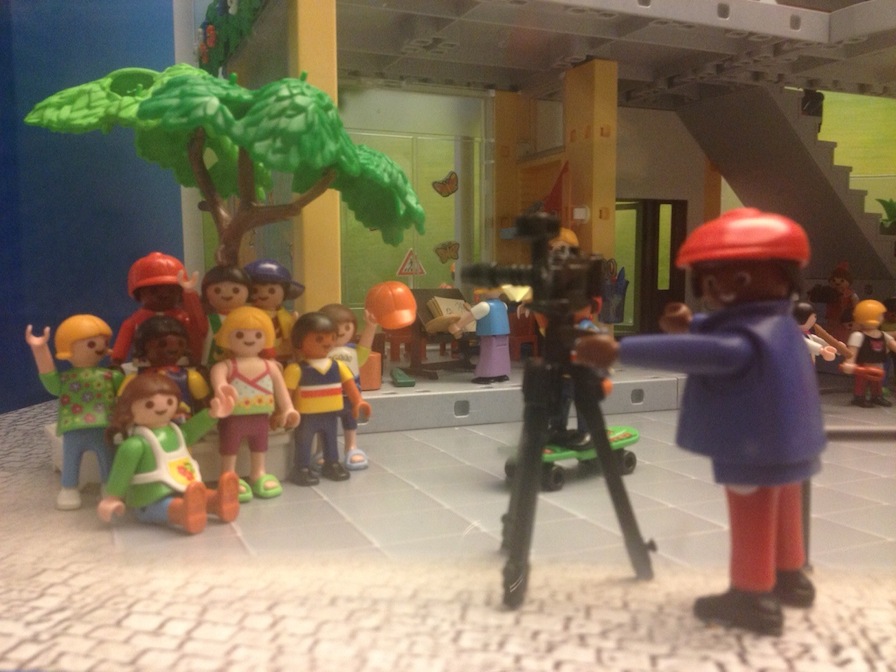
Everyone a Leader
I have a dream. I dream of my two year old little girl all grown up, doing what she loves and loving what she does. She tells me how much fun she’s having at work. And that she’s great friends with the people there. And of how what she does makes the world a better place.
When I explain how far mankind’s relationship with work has come in the past twenty years alone, she laughs. She shakes her head at ideas such as “putting people first”, “Intent-Based Leadership“, “self-actualisation” and “collaboration”.
She tells me, “It all sounds like common sense, Mama. Why would people want to live and work any other way?”
I reply, “Because all too often, common sense isn’t common practice, Darling. And even though some ideas sound simple, they’re not easy to implement.”
She asks me to tell her the Ship story, of how long ago I made a wish to learn how to lead. And how one day, I met a former U.S Navy submarine captain who gave his power away to turn his ship around, taking his crew and boat from poor performance to greatness. And of the leadership course that transformed the way I live and lead.
My grownup little girl turns to me and says with a bold and brave smile, “I intend to… make the most of my life because anything less would be a waste of the gift you have given me.”
And with that, we hug and I look forward to a brand new adventure of making more dreams come true.
May 28, 2015

 XP Days Benelux is an international conference where we learn to bring software to life and grow mature systems that support business needs.
It provides an excellent environment for exchanging ideas, hands-on exercises and extreme experiences.
What are we looking for?

What are you looking for? What would make it a WOW session for you and our participants?
We’re interested in:
- Experiences with new and old techniques. What worked; what didn’t? Why? What have you learned?
- Unexpected ideas from other disciplines and sciences. How can we cross borders? What lessons have we missed? How can we collaborate better with people from other disciplines and departments?
- Ask for help from other participants. What scary problems confront you and your team?
- People from outside IT with an interesting story. What can we learn from their experience?
- Pushing the limits of techniques and organisations, doing the “impossible”. How far can you go if you challenge commonly accepted assumptions?
- Back to basics. What happens if we really take the Extreme Programming values of Simplicity, Commmunication, Feedback, Courage and Respectseriously?
- Taking back agile. What does “agile” really mean to you and why is it important?
- Questioning agile. Where, when and why would you not use agile methods? Why? What can we learn about context and applicability?
The XP Days community loves highly interactive sessions where everyone participates and learns from each other.
During review and selection, your session will receive bonus points when…
- … you have no slides. Think outside the box and sharpen your story telling skills.
- … it appeals to both technical and functional people. Involve the geeks, challenge the managers.
- … it has the “XP Factor”. Is it entertaining and crazy? Does it take people out of their comfort zone?
- … you’ve had a dry run. Did you join one of our try-outs? Did you send a video introduction?
- … your subject is fresh and original. Maybe something outside the domain of IT?
- … it has an original format. Doing something with fruit? Are there any sports involved? Great!
- … your session poses a question instead of giving an answer.
- … if you’re new to presenting at XP Days. First timers receive a warm welcome…
How does it work?
You propose your idea for a session: a title and a short description.From then on, organizers and session proposers work together to refine and improve your proposal, adding more information and improving the description and session content. We’ll give feedback and provide opportunities for try-outs. In return, we expect from you that you help others to turn their idea into a WOW session.
Yes but, I haven’t presented at a conference before.
You don’t need to be an experienced presenter, you “just” need one good idea or question to start with. And then you iterate and improve your idea with the help of the other presenters and the organizers.
We offer coaching for first-time presenters. Contact sessions if you want help proposing and refining your session.
Submit your proposal now. You have until July 5th 2015 to propose your idea. The sooner you send in your idea, the more feedback you will receive.
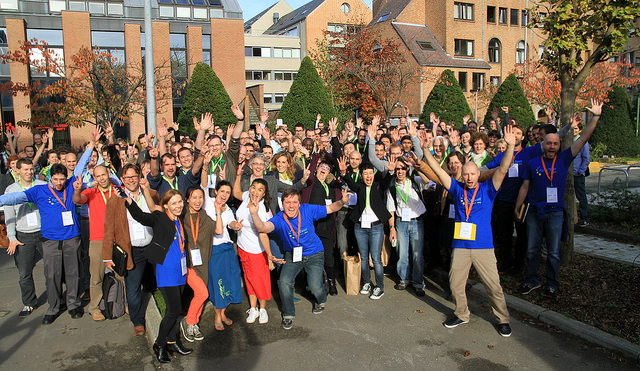
Agile Tour Brussels is calling for speakers!
Agile Tour Brussels is one of the biggest agile conferences in Belgium. Last year we gathered 250 attendees and speakers from Belgium, France, U.S, U.K, Luxemburg, Netherlands and Sweden to share our passion for Agile. The purpose of this conference is to gather in one place Agile practitioners and people wanting to know more about Agile.
At Agile Tour Brussels you will meet a mix of attendees who are either completely new to Agile, experienced or experts.
This year we’re going to have different tracks, and for each of these we’re looking for two kind of sessions: Interactive Talk (Presenter is speaking for most of the time with audience interaction) or Workshop (Primarily focused on hands-on participation with the audience).
Track 1: Experience reports.
Tell us your success or failure stories about Implementing Agile in Belgium (or in Europe), What is (not) working for you? If you’re an agile coach or facilitator, bring your client with you!
Track 2: Pragmatic Track
We’re looking for small changes or fundamentals, pragmatic things that work. How do you gather requirements? How do you run an outstanding retrospective? In this track your participants will learn something they can apply the day after. It can be technical, soft-skills or a process you use.
Track 3: Let’s Play together
This Track is for Agile Games and Serious Games. It’s also the opportunity to suggest “BootCamp” sessions like Introduction to [put Agile method here] or how to estimate with Agile,…
Track 4: Agile Management
What’s the role of Managers in Agile? What’s an Agile Manager? What’s an Agile organization? This track will cover subjects such as Management 3.0, Flat organizations, Evidence Based Management,…
Track 5: Various
Do you have a favourite subject you’d like to talk about, a kick-ass workshop you’d like to run, a theme you’d like to share? This track is for you!
All Agile methods are welcome: Scrum, XP, KanBan, Lean, Devops, Leadership, Lean Startup, Coaching, System thinking, Product Aspect, Agile outside IT.
We are looking for different levels of sessions: for beginners, practitioners and experts. We welcome experienced as well as new speakers.
How to submit a session?
To submit a session, fill in the form located here: http://at2015.agiletour.org/fr/callForSpeaker.html
(you can log into the website with your existing account or create a new one).
Tips for a successful submission:
- Don’t forget to specify that you’re applying for Agile Tour Belgium – Brussels
- Make sure you’re in the call for speaker of Agile Tour 2015 (links to the previous editions could still be active in the platform)
- Specify the size of the audience you’d like to have for your session
- Sessions must be in English
- We would prefer to have session of 1 hour maximum
- Deadline for submission: 10th of July 2014
All information about the event will be published on http://www.atbru.be
If you cannot make it, you can still support us by tweeting about #atbru, blogging, speaking about our event.
March 24, 2015
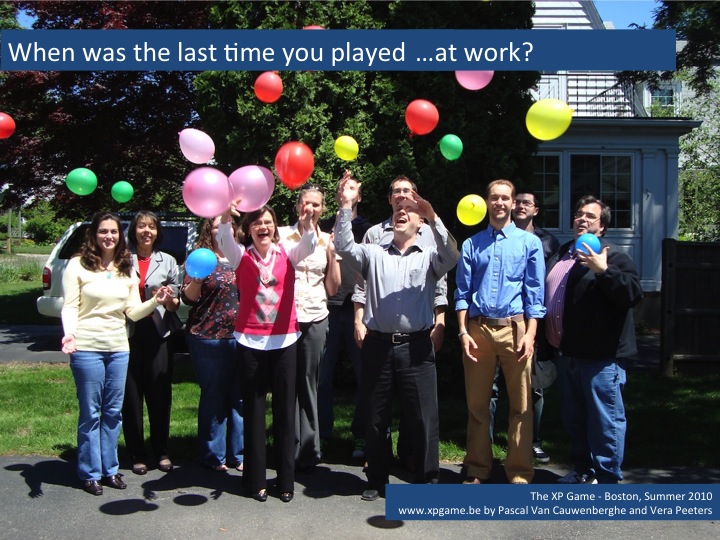
The Meaning of Life
Did you know that in Chinese, the word “business” is made up of two characters that translate to “meaning” and “life”?
Given that we spend more than 70% of our waking hours doing work or work-related activities, don’t you wish we could all make more of our meaning of life?
Come join me in an interactive presentation on Play to help take you and your team from good to great:
Learn more about how to transform work through play complete with my talk and presentation at the Playmaking site!
Thanks to everyone at Playcamp London for their enthusiasm for play and learning. Play, like Change, begins with ourselves.
March 08, 2015
Calling all Players…
Consider this your very special invitation to Playcamp London on 24 March 2015!
What’s Playcamp?
Playcamps are one-day regional conferences celebrating the use of Innovation Games® and other serious games for problem-solving in both the public and private sector. These events capture the best of traditional conferences and unconferences through a mix of compelling speakers and attendee-driven content, and include both in-person and online forms of serious play.
Why play at Playcamp?
- Learn about how play can help you bring about positive change at work and deliver more value.
- Play and learn games that can help you with your daily job.
- Gain new skills in facilitation, problem solving, creativity and innovation.
- Get the most out of learning from play practitioners.
- Have fun and make friends!
What’s the agenda for Playcamp London?
Luke Hohmann and I will be keynoting and there’ll be 6 possible open space slots for you to share ideas with others on games you play to deliver more value at work. Find out more here.
Where can you sign up?
Here! Get your tickets quick! And tell you friends all about Playcamp!
What if you’re not in London and you want to play?
Check out playcamps happening around the world. And if you can’t find one in your neighbourhood, why not organize your own? Contact Luke and his team here.
Read the latest InfoQ interview with inventor of Innovation Games Luke Hohmann who’ll be keynoting as will I.
Hope to see you there!
February 14, 2015
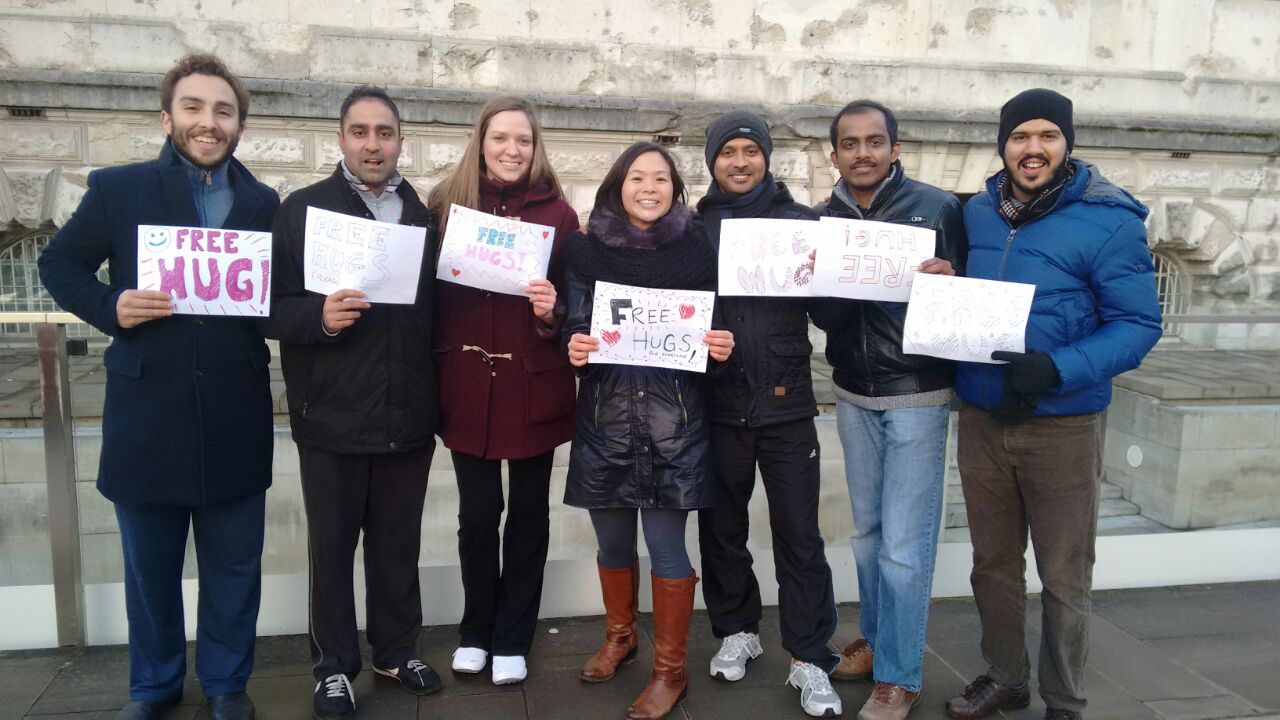
Years ago, I made a wish. A wish that one day, I’d be brave enough and mad enough to take part in the movement that is taking the world by storm, or should I say love? I’m, of course, referring to the Free Hugs Campaign started by one man in an attempt to reconnect with humanity.
I first came across “free hugging” during a visit to Helsinki back in December 2008. It was a bitterly cold winter, the kind that made you worry about losing a toe or two if you spent too long stomping the white pavement on your own.
I was wandering around the city after a jam-packed day of Agile training and who did I find beaming with warm smiles and arms wide open towards me but two young women at the train station?
Incredibly, these two young women were offering free hugs. To anyone and everyone.
A Wish Come True
After 6 long years, this random wish of mine finally came true. On Sunday, 18 January 2015, to my great fear and delight, I was offered the chance to give free hugs to the people frequenting Pimlico (home of Tate Britain) on a chilly winter afternoon.
And in spite of of the butterflies in my tummy screaming “No!!! Don’t do it!!!”, I knew my time had come. To connect with the rest of humanity like I’ve never dared to but have always longed to do.
Together with a bunch of well-wishing strangers in search of inner peace, I stomped the pavement and offered free hugs to anyone and everyone.
Between us, we hugged over 80 people in under an hour and didn’t get arrested.
For me, the most remarkable takeaway from that experience is that I learned more about what it means to be human in those 60 minutes than I have in my lifetime so far.
I learned that strangers can be kind and generous. That most of us want nothing more than to connect with one another. That we’re all in search of true love and when we find it, what better way to celebrate it than with a hug?
Happy Valentine’s Day!
February 11, 2015
April 3, 2015 in Mechelen, Belgium
Each spring we rerun the best sessions of the previous XP Days Benelux at the “Mini XP Day“.
This year we have 11 sessions that cover:
- Improving testing, design and coding skills by “programming people”
- Honing your Test Driven Development skills
- Recruitment techniques
- Going from idea to business value
- Using feedback loops in Scrum
- Improving the way you work and the way you work with others
- Managing agile transitions
- How students and teachers apply “EDUScrum” in school
- Defeating the dark forces that hold you and your team back from taking action
There’s something for everybody who’s interested in agile, development and systems thinking.
Don’t take our word for it
Have a look at the feedback from participants, photos and articles about the conference.
Don’t wait too long to register for the conference, as it usually sells out.
See you there!

January 07, 2015

Once upon a time, in a land not too far away, there lived a young man with a head full of dreams.
Every night he would fall asleep and tour castles in the air and see the world on one long magic carpet ride.
Every morning he would wake up, but instead of feeling refreshed, he felt sad. Sad that his dreams stayed only in his head while the carpet in his living room grew dustier by the day.
Then just before the young man’s wheeze developed into a dust allergy, he came across a rusty looking lamp at his local charity shop.
Intrigued by what the lamp would look like after a clean, he gave it a good rub.
And that’s the moment when everything changed.
The young man discovered the genie’s promise of three wishes was no more than a myth, one that the genie had herself made up to stop greedy people from wanting more without taking the time to figure out what they really needed.
And it was a long time before the young man made his first wish for he didn’t want to wish his life away.
And so it was and always will be that everything we dream of begins with a wish.
December 24, 2014
As Christmas Day draws near and 2015 beckons, it’s time to reflect on the past year before figuring out my answers to “what next?”.
Looking back, 2014 has been full of play, fun and laughter – much more than I’ve ever experienced, both at work and at home.
That’s not to say that it’s all been a lovely walk in the park. Being in the business of organisational change means there are plenty of draughts and floods, plagues and nightmares, and much more besides.
The thing that stands out most in 2014 for me is the importance of mindset. Set your heart and mind to something and magic happens.
Highlights at Work
- Returning to work after a year of intense learning as a first time mother and discovering the Agile seeds I sowed a year ago still growing in my workplace!
- Hearing pennies drop and seeing lightbulbs light up at an internal work conference “UBSTechConf” I helped co-chair – thanks to Ian Bond for co-chairing, the internal and external speakers for their inspiring talks and Skillsmatter for all their help and event-organising expertise!
- Challenging people to define their own purpose at work in order to realise the goals of their organisation in an interactive talk I co-delivered at “UBSTechConf” – thanks to Tom Miller for his continued support and collaboration in growing Agile at work!
- Achieving a life-work balance by defining goals and setting clear priorities that kept me going and growing!
- Making many more friends who’ve helped make Enterprise Gardening more fun and rewarding than ever!
Highlights at Play
- Getting a session on the topical subject of “Resilience” selected for BCS SPA 2015 and being invited back for an encore at Mini SPA – a recognition that “soft” topics are vital for success in IT
- Playing with 130 participants at Agile Cambridge by giving my first ever keynote on my favourite topic: “The Power of Play” – thanks to Mark Dalgarno for the invitation!
- Awaking Snow White at Agile Tour London by playing “Mirror, Mirror on the Wall… Why Me?”, one of my favourite Agile Fairytales!
- Receiving feedback from readers of “The Dream Team Nightmare“, the first ever Agile novel written in the Choose-Your-Own-Adventure genre!
Making Magic Happen for You
What about you? What are your highlights in 2014? And what are your wishes for 2015?
Wishing everyone a very Merry Christmas! And thank you for reading!
October 21, 2014
Tom Cruise has been a continuous source of inspiration in my personal Agile journey in so many ways.
In Jerry Maguire, he emphasised the importance of “Show me the money!”, a quote I use whenever I talk about prioritisation by business value.
Then there are the diverse and dangerous missions he gets assigned to, to which he always responds with a purposeful smile and a gleam in his eye.
And now his latest film has proved to be the ultimate inspiration to people like us, agents of change for greater good.
The parallels between the hero’s conundrum in Edge of Tomorrow (aka Live Die Repeat) bears more than a canny resemblance to what many of us experience at work. Day after day after day. It’s no wonder then things eventually get us down.
That’s when I remember what Peter Drucker says, grand daddy of organisational culture. “Organisations form and deform people,” he said.
It seemed like such a bleak observation when I first heard it all those years ago, that I found myself boldly reply, “It takes two to tango. People allow themselves to be formed and deformed.”
I know that according to systems thinking a bad system beats good people every time, but what if those good people worked together to improve the system? To change the game for a better tomorrow?
I know how hard things can be when everything seems intent on catching you out or making you stumble.
In my experience, the trick is to keep playing when the going gets tough and make friends. Because you never know when you’ll need them. And a lifelong journey of change is best enjoyed in good company and laughter.
What if each of us could “re-set” and change the future by learning from each moment that passes?
Live. Love. Repeat.
September 29, 2014

I’m a September baby and this year, I treated my friends at work to the most scrumptious cake I’ve ever seen. What better way to remind us of transformative journeys along the Yellow Brick Road than with the Rainbow Cake by Hummingbird Cafe.
Folks ummed and ahhed at the sight of the multi-coloured layers of this beautiful cake only to be further and pleasantly surprised by the bubble gum flavoured icing as they savoured their slice.
“If I still wrote software, this would be the kind of software I’d create,” I mused, drunken on sugary goodness.
“Don’t you think that would smack of over-engineering?” remarked a fellow cake-connoisseur.
Of course, what I really meant to say is that I marvel at the thought of creating something so thoughtful and thought-provoking as the Rainbow cake. A work of exquisite (and, optionally, edible) beauty that would brighten the world and remind us of what passion, creativity and craftsmanship can produce.
All this serves as a timely reminder that we need to live our dreams to make them come true.
Here’s to enjoying the rainbows on your journey of a lifetime. Happy Birthday one and all!
July 15, 2014
Food for Thought
The Next 7 Habits of Highly Effective Coaches is the new addition to my mini series inspired by the style of Paul Coelho‘s “Manual of the Warrior of Light“. You can find the first 7 habits here.
BONUS: You can download the entire series published in the PragProg Magazine:
For more ideas on personal and team development, take a look at “The Dream Team Nightmare – Boost Team Productivity Using Agile Techniques“. Happy Coaching!
July 14, 2014
Habit 14 – Harness Your Empathy
Some say it’s impossible for a man who’s warm to understand a man who’s cold. Empathy is the first step towards understanding. It’s a key skill that all of us can develop. Empathy begins with an open mind.
Exercise: Lunch with “The Other”
Choose a colleague who often has opposing viewpoints to yours. Invite them to lunch. Explain you’d like to better understand their thinking and that you’d appreciate if they’d be open to yours. You promise to both keep an open mind and listen deeply. Bon appétit!
For more information, see: Ted talk by Elizabeth Lesser on Take ‘the Other’ for Lunch.
About This Blog Entry
The Next 7 Habits of Highly Effective Coaches is part of a mini series inspired by the style of Paul Coelho‘s “Manual of the Warrior of Light“. You can find the first 7 habits here.
July 07, 2014

Habit 13 – Motivate with Flow
One of the greatest sources of satisfaction is achieving flow in what you do. Instead of motivating people through reward and/or recognition, create an environment where people have the chance to practice and get good at what they do. The satisfaction derived from flow will be greater than anything extrinsic has to offer.
Exercise: Free Flow
Identify a goal and a timebox (eg 15 minutes). Then do an activity in that timebox that enables you to get closer to your goal. Notice how you felt as you focused on the task at hand. What did you achieve? How can you flow again? How can you flow on demand?
For more information, see: Ted talk by Mihaly Csikszentmihalyi on Flow, the secret to happiness.
About This Blog Entry
The Next 7 Habits of Highly Effective Coaches is part of a mini series inspired by the style of Paul Coelho‘s “Manual of the Warrior of Light“. You can find the first 7 habits here.
July 01, 2014
The Challenges We Face
Are you feeling stressed? Do you feel uncertain about the future? Everyday we find ourselves facing different challenges, accomplishing various tasks and constantly adapting.
As mankind has evolved, we’ve become more conscious and informed of who we are and how our minds work. Resilience, previously considered a personality trait, is now a vital modern-life skill which can be developed to help us better deal with everyday challenges as well as great adversity.
My friend Lauren L’ecaros and I have created a brand new 75-minute session to help us all better understand how resilient we are and figure out how to become more resilient in order to overcome our next big challenge.
Check out this presentation complete with speaker notes on Slideshare released under the Creative Commons Share-Alike-By-Attribution licence. Have fun with your colleagues, friends and family:
Going for Hope
During our search to increase our resilience, we noticed 4 key factors common in helping us tackle our challenges.
We call it the HOPE model.
Help – We can benefit from asking for help as much as giving it
Openness – Being present and daring to be vulnerable with the things we share with others
Perseverance – Never give up. If at first you don’t succeed, try something different
Ease – Strive to perform at your best
June 30, 2014
Habit 12 – Dare to Be Different
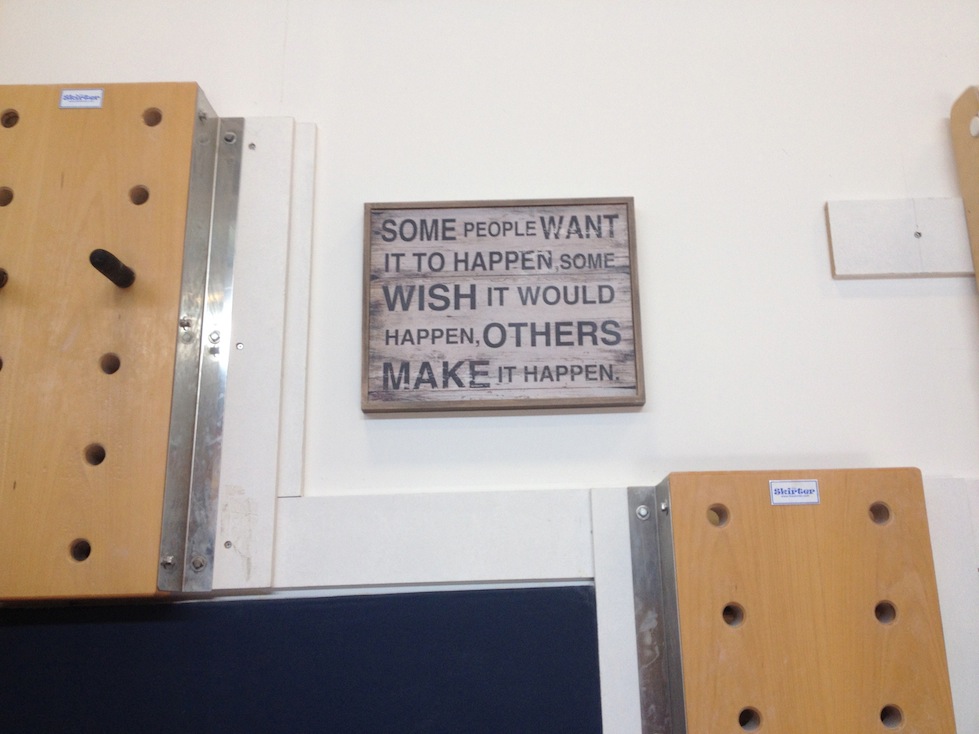
Nothing stays the same but one thing’s for certain. Things change. Choose to challenge and change the status quo for better. Be the beacon that encourages people to stand up and stand out. When you’re bold and brave, you can transform the grey into a rainbow.
Exercise: Be a Super Hero
If you were a super hero, who would you be and why? Or perhaps, if you had a superpower what would it be and why? Take turns answering either or both of these questions over lunch with your friends at work. How can you leverage all your superpowers to transform the way you work for the better?
For more information, see: Watch a film or read a comic about a super hero (eg Kick-Ass). Ideally, do this with friends. It’s more fun and so much more empowering! Repeat the exercise and see what new ideas you can come up with. The more “out there” the idea, the better!
About This Blog Entry
The Next 7 Habits of Highly Effective Coaches is part of a mini series inspired by the style of Paul Coelho‘s “Manual of the Warrior of Light“. You can find the first 7 habits here.
Updated on September 22, 2019 12:27 AM
Powered by: Planet Planet